
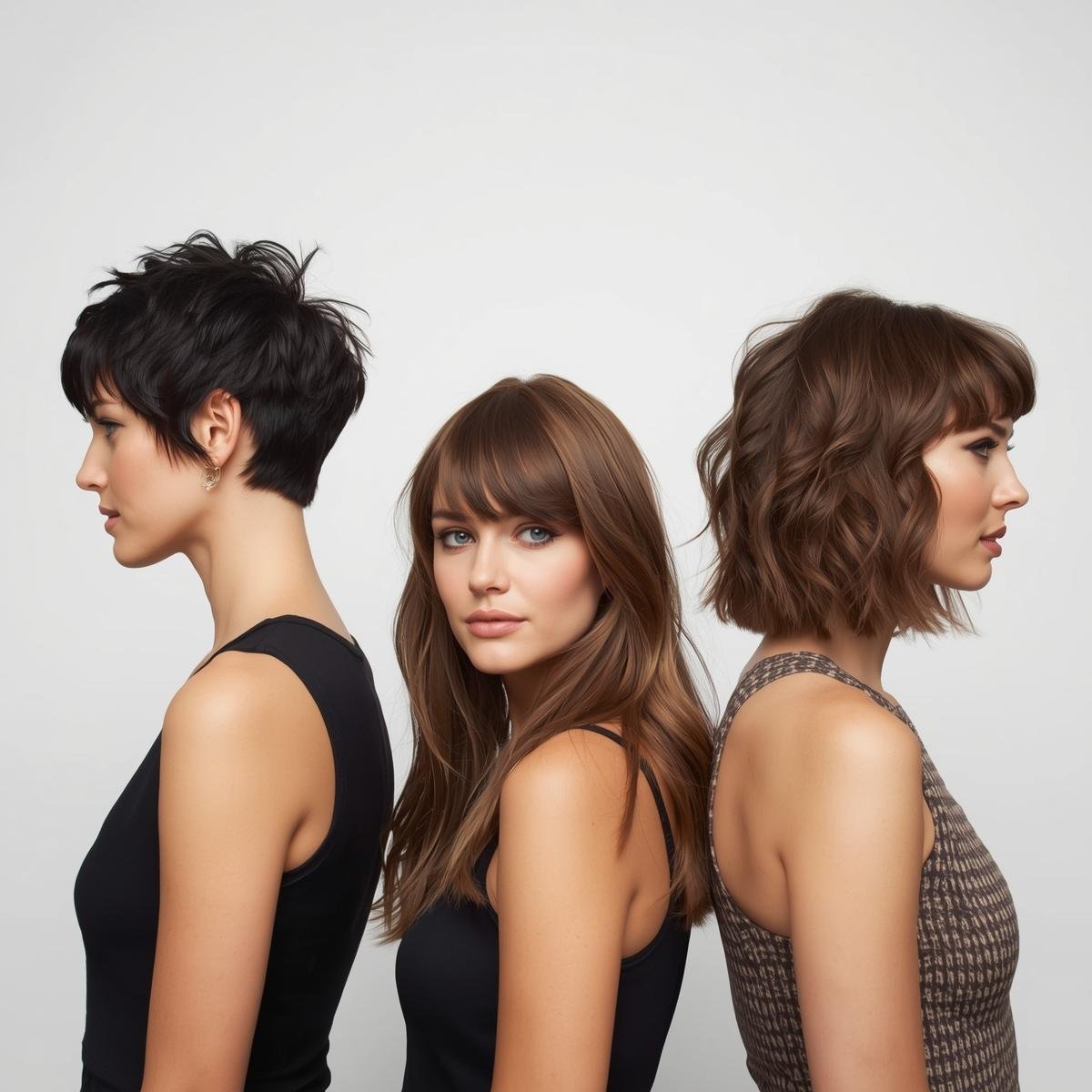
The world of trendy haircuts can feel confusing. Three names keep appearing in conversations about layered hairstyles: butterfly cut, wolf cut, and octopus cut. While they share some similarities, each cut has distinct characteristics that create different looks.
This guide explains the differences between these three popular haircuts. By the end, you will know exactly which one suits your hair type and style preferences.
Quick Comparison Overview
| Feature | Butterfly Cut | Wolf Cut | Octopus Cut |
|---|---|---|---|
| Main Vibe | Soft, feminine, voluminous | Edgy, messy, rock-and-roll | Subtle, shaggy, textured |
| Layers | Feathered, blended | Choppy, disconnected | Moderate, tentacle-like |
| Volume | High at crown | Extreme throughout | Moderate throughout |
| Face Framing | Soft curtain bangs | Heavy, choppy fringe | Wispy, subtle pieces |
| Best Hair Type | Medium to thick | All types | Fine to medium |
| Maintenance | Low to medium | Medium | Low |
| Origin | Modern layered cut | 1970s shag + mullet | 1970s shag evolution |
The Butterfly Cut: Soft and Voluminous
The butterfly cut earned its name from the way the layers frame the face and flow outward like butterfly wings. This cut focuses on creating softness and movement while maintaining length.
Key Characteristics
- Feathered layers that blend seamlessly into each other
- Noticeable contrast between shorter face-framing pieces and longer bottom layers
- Volume concentrated at the crown for lift and bounce
- Soft curtain bangs or wispy face-framing sections
- Rounded silhouette when styled
How It Looks
When you see a butterfly cut, you notice the volume first. The shorter layers around the face create a frame that draws attention to the cheekbones and eyes. The longer layers underneath maintain length but have weight removed so they move freely.
The overall shape is soft and feminine. Unlike choppier cuts, the butterfly cut blends its layers so there are no harsh lines or abrupt transitions.
Best For
- People who want to keep their long hair but add volume
- Those with medium to thick hair that needs weight removal
- Anyone seeking a versatile cut that works both curly and straight
- Women who prefer a polished, put-together look
Styling Approach
The butterfly cut responds well to blow-drying with a round brush. This technique enhances the natural lift at the crown and encourages the face-framing pieces to curve outward. It also looks beautiful air-dried for those with natural waves or curls.
The Wolf Cut: Edgy and Disconnected
The wolf cut combines elements of the shag haircut from the 1970s with the mullet’s edgy attitude. It is intentionally choppy, messy, and full of texture.
Key Characteristics
- Heavy, choppy layers throughout the entire head
- Disconnected sections that create deliberate choppiness
- Extreme volume from root to tip
- Heavy fringe or curtain bangs that blend into the layers
- Shorter sections at the crown with longer pieces throughout
- Tapered or slightly longer in the back
How It Looks
The wolf cut has a distinct rock-and-roll aesthetic. It looks intentionally undone, as if you just rolled out of bed but in a stylish way. The layers are not meant to blend smoothly. Instead, they create texture and movement through contrast.
From the front, you see heavy face-framing pieces that often start short and gradually lengthen. From the back, the layers create a feathered, textured silhouette that can look almost mullet-like depending on how extreme the cut is.
Best For
- People who want a bold, edgy look
- Those with natural texture who embrace bedhead style
- Anyone tired of polished, perfect haircuts
- Individuals with fine hair who need major volume boost
- People who prefer low-effort styling
Styling Approach
The wolf cut thrives on texture. Stylists recommend applying texturizing spray or sea salt spray to damp hair and scrunching. Air-drying enhances the natural choppiness. For more definition, a curling wand can be used on random sections to enhance the disconnected feel.
The Octopus Cut: Subtle and Shaggy
The octopus cut is the newest addition to this family of layered haircuts. It gets its name from the way the longer pieces hang down like tentacles while shorter layers sit on top.
Key Characteristics
- Moderate layers that are less extreme than the wolf cut
- Longer bottom sections that resemble tentacles
- Shorter top layers that create subtle volume
- Wispy, subtle face-framing pieces
- Blended transitions between layer lengths
- Natural, effortless appearance
How It Looks
The octopus cut sits somewhere between the butterfly and wolf cuts. It has more texture than a butterfly cut but less choppiness than a wolf cut. The name comes from the way the longer pieces hang down while the shorter layers sit on top, creating a shape vaguely reminiscent of an octopus.
When you look at an octopus cut from the front, you notice soft framing around the face that is not as dramatic as the butterfly cut’s wings. From the back, the layers create movement without the extreme disconnection of the wolf cut.
Best For
- People who want something trendy but subtle
- Those with fine to medium hair that needs movement
- Anyone transitioning from long hair to more layers
- Individuals who want low-maintenance style
- People who prefer understated, natural looks
Styling Approach
The octopus cut works with minimal effort. Air-drying with a light texturizing spray enhances the natural layer separation. For more definition, a large-barrel curling iron can be used on random sections to encourage the tentacle effect.
Detailed Comparison by Category
Layer Structure
Butterfly Cut: Layers are feathered and blended. The transition between short and long sections is smooth and intentional. The shortest layers hit around the chin or cheekbones.
Wolf Cut: Layers are choppy and disconnected. The cut deliberately creates contrast between sections. Layers can start as short as the ears and extend to various lengths throughout.
Octopus Cut: Layers are moderate and semi-blended. The top layers are shorter while the bottom sections remain longer, creating the tentacle effect. Transitions are softer than the wolf cut but more noticeable than the butterfly cut.
Volume Profile
Butterfly Cut: Volume concentrates at the crown and gradually decreases through the lengths. The goal is lift at the top with movement throughout.
Wolf Cut: Volume distributes evenly from root to tip. The choppy layers create fullness at all levels, sometimes appearing almost triangular in shape.
Octopus Cut: Volume concentrates on the top half while the bottom tentacles hang straighter. This creates a mushroom-like silhouette when viewed from certain angles.
Face Framing
Butterfly Cut: Features soft curtain bangs or wispy face-framing pieces that sweep outward. The framing is intentional and designed to highlight facial features.
Wolf Cut: Includes heavy, choppy fringe that often starts short and blends into the side layers. The framing is bold and dramatic.
Octopus Cut: Has subtle, wispy face-framing pieces that are less pronounced. The framing is there but does not demand attention.
Maintenance Requirements
Butterfly Cut: Requires trims every 8-12 weeks to maintain the shape. The face-framing pieces may need more frequent attention.
Wolf Cut: Grows out gracefully due to its intentionally choppy nature. Can go 3-4 months between trims.
Octopus Cut: Low maintenance with minimal shape upkeep. The subtle layering grows out naturally without awkward phases.
Which Cut Suits Your Hair Type
For Straight Hair
Butterfly Cut: Works well but requires styling to achieve the winged effect. Blow-drying with a round brush is necessary for volume.
Wolf Cut: Creates instant texture in straight hair. The choppy layers add movement that straight hair naturally lacks.
Octopus Cut: Provides subtle movement without requiring much styling. Good for those who want low-maintenance texture.
For Wavy Hair
Butterfly Cut: Enhances natural waves beautifully. The layers encourage wave formation throughout the hair.
Wolf Cut: Amplifies waves dramatically. The choppy layers create tousled, beachy texture with minimal effort.
Octopus Cut: Defines waves without overdoing them. The tentacle effect shows off natural wave patterns.
For Curly Hair
Butterfly Cut: Shapes curls while maintaining length. The layers prevent the triangular shape that curly hair can develop.
Wolf Cut: Creates dramatic, voluminous curl patterns. Can be unpredictable depending on curl type.
Octopus Cut: Defines curls while reducing bulk. The tentacle effect shows off individual curl clumps.
For Fine Hair
Butterfly Cut: Works if layers are internal rather than choppy. Too much layering can make fine hair look thinner.
Wolf Cut: Adds significant volume to fine hair. The choppy layers create fullness that fine hair typically lacks.
Octopus Cut: Provides subtle volume without removing too much weight. Good for fine hair that needs movement.
For Thick Hair
Butterfly Cut: Excellent for removing bulk while maintaining length. The layers thin out heavy hair effectively.
Wolf Cut: Removes significant weight while creating texture. Good for thick hair that feels heavy.
Octopus Cut: Reduces some bulk while keeping thickness. The tentacle effect shows off thick hair’s natural density.
Face Shape Considerations
Round Faces
Butterfly Cut: The face-framing layers elongate round faces when they start at cheekbone level. Avoid too much width at the sides.
Wolf Cut: The volume can add width, which may not flatter round faces. Keep the sides more fitted.
Octopus Cut: Works well with round faces due to the vertical tentacle effect. The longer pieces create length.
Oval Faces
Butterfly Cut: Flatters oval faces beautifully. Almost any variation works.
Wolf Cut: Complements oval faces with its balanced volume distribution.
Octopus Cut: Enhances oval features without overwhelming them.
Square Faces
Butterfly Cut: Softens angular jawlines with wispy, feathered pieces around the face.
Wolf Cut: The choppy texture can either soften or emphasize angles depending on placement.
Octopus Cut: The soft, subtle layers complement square faces without adding harsh lines.
Heart-Shaped Faces
Butterfly Cut: Balances wider foreheads with volume at the chin level. The face-framing pieces soften the forehead.
Wolf Cut: Works when volume concentrates lower on the face. Avoid too much top volume.
Octopus Cut: The tentacle effect draws attention downward, balancing heart shapes well.
Styling Product Recommendations
For Butterfly Cut
- Volumizing mousse applied to roots before blow-drying
- Light-hold hairspray to maintain shape without stiffness
- Shine serum on ends for polished appearance
- Heat protectant for thermal styling
For Wolf Cut
- Texturizing spray or sea salt spray for enhanced choppiness
- Dry shampoo for added texture and volume
- Matte paste or clay for definition on shorter sections
- Leave the natural texture whenever possible
For Octopus Cut
- Light texturizing spray for subtle separation
- Volumizing powder at roots for lift
- Smoothing cream for frizz control
- Air-dry cream for effortless styling
Maintenance Schedules
Butterfly Cut:
- Trim every 8-12 weeks to maintain shape
- Face-framing pieces may need 6-8 week touch-ups
- Deep condition weekly to keep ends healthy
Wolf Cut:
- Trim every 12-16 weeks due to intentional choppiness
- Shape holds well during growth
- Regular texturizing products maintain the look
Octopus Cut:
- Trim every 10-14 weeks for subtle maintenance
- Grows out naturally with minimal awkward phases
- Occasional dusting of ends keeps them healthy
Cost Considerations
All three cuts typically cost similar amounts at salons. The price depends more on your location, stylist experience, and salon reputation than the specific cut.
Factors that affect pricing:
- Stylist expertise with layered cuts
- Salon location and overhead
- Hair length and thickness
- Additional services like deep conditioning
How to Choose the Right Cut
Ask yourself these questions before deciding:
Do you prefer polished or messy styles?
- Polished: Butterfly cut
- Messy: Wolf cut
- In-between: Octopus cut
How much time do you spend styling?
- Willing to style: Butterfly cut
- Minimal effort: Wolf or octopus cut
What is your hair texture?
- Medium to thick: Butterfly or wolf cut
- Fine: Wolf or octopus cut
- Curly: Any works with proper technique
How often do you visit the salon?
- Regular visits: Butterfly cut
- Infrequent visits: Wolf or octopus cut
What is your personal style?
- Feminine and classic: Butterfly cut
- Edgy and alternative: Wolf cut
- Subtle and trendy: Octopus cut
Frequently Asked Questions
Can I switch between these cuts easily?
Yes. Growing out one layered cut to try another is straightforward because all three are based on layering techniques. Your stylist can usually transition you from one to another during a single appointment.
Which cut adds the most volume?
The wolf cut adds the most volume due to its choppy, disconnected layers. The butterfly cut adds concentrated volume at the crown. The octopus cut adds moderate volume throughout.
Which cut is lowest maintenance?
The octopus cut requires the least maintenance due to its subtle layering. The wolf cut also grows out well due to its intentionally choppy nature.
Do these cuts work for short hair?
These cuts are designed for medium to long hair. Short hair versions exist but look different from the classic interpretations.
Can I get these cuts with bangs?
Yes. All three cuts pair well with bangs. Curtain bangs suit the butterfly cut. Heavy fringe works for wolf cuts. Wispy bangs complement octopus cuts.
Which cut is best for thin hair?
The wolf cut typically works best for thin hair because the choppy layers create volume. The butterfly cut can work if layers are internal rather than heavy. The octopus cut provides subtle volume without removing too much weight.
Are these cuts appropriate for professional settings?
The butterfly cut is most appropriate for conservative professional settings. The wolf cut may be too edgy for some workplaces. The octopus cut falls somewhere in between.
Conclusion
The butterfly, wolf, and octopus cuts each offer something unique. The butterfly cut provides soft, feminine volume that frames the face beautifully. The wolf cut delivers edgy, choppy texture for those who want a bold statement. The octopus cut offers subtle, shaggy layers for a natural, understated look.
Understanding the differences helps you choose the cut that aligns with your hair type, styling preferences, and personal aesthetic. Whichever you choose, working with an experienced stylist ensures the best results. Show them pictures of the specific look you want and discuss how it will work with your unique hair characteristics.

Leave a Reply